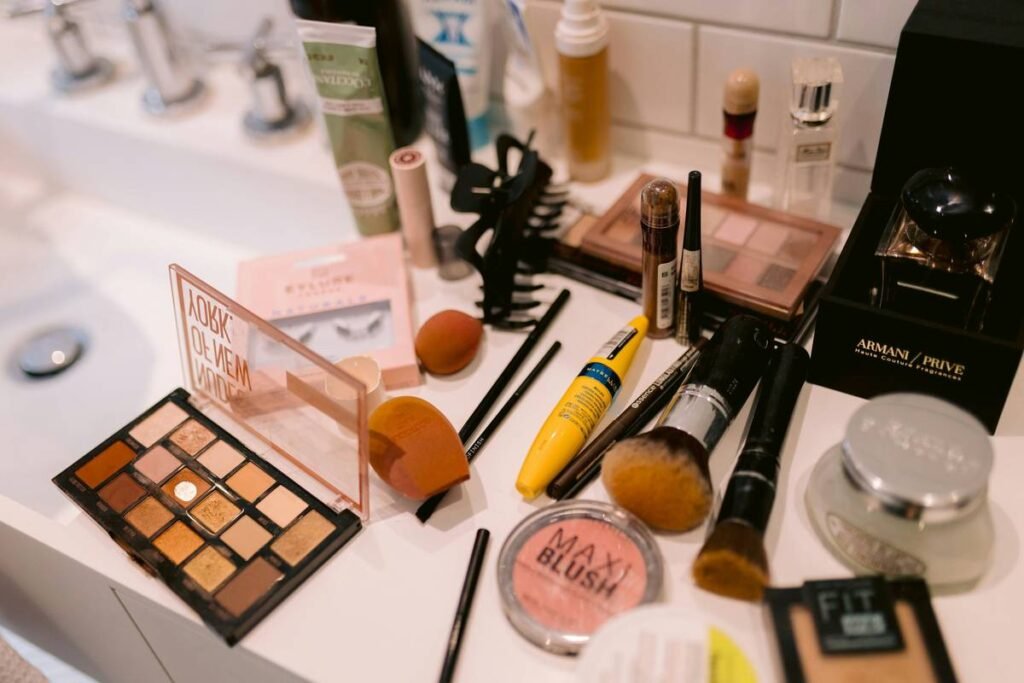
Ever dug through a chaotic makeup drawer for 20 minutes—only to find your favorite lipstick with the cap chewed off by your dog and your foundation expired since 2021? Yeah. We’ve been there. A messy makeup situation isn’t just annoying; studies show clutter increases stress and decision fatigue (Princeton Neuroscience Institute, 2011). And if your “system” is a Ziploc bag shoved behind sunscreen bottles—congrats, you’re overdue for a real makeup storage system.
In this guide, we’ll cut through the Pinterest fluff and show you how to build or choose a **functional**, hygienic, and space-smart makeup storage system that adapts to your routine—not the other way around. You’ll learn:
- Why most organizers fail within 3 months (and how to avoid it)
- How to pick materials that won’t breed bacteria or melt your brushes
- Real-world setups from pros and everyday users (plus what *actually* lasts)
- The one “clever” hack that ruins product integrity (avoid this!)
Table of Contents
- Why Most Makeup Organizers Fail Within 90 Days
- Step-by-Step: Building Your Custom Makeup Storage System
- 5 Pro Tips for Long-Term Makeup Organization Success
- Real Users, Real Setups: What’s Working in 2024
- Makeup Storage System FAQs
Key Takeaways
- A true makeup storage system prioritizes hygiene, accessibility, and adaptability—not just aesthetics.
- Acrylic isn’t always best: porous materials like wood or fabric can harbor bacteria if not sanitized properly.
- Vertical storage + clear compartments = faster routines and less product waste.
- Over-organizing (e.g., assigning a slot per shade) often backfires—flexibility wins long-term.
- Replace or deep-clean your system every 6–12 months to prevent microbial buildup.
Why Most Makeup Organizers Fail Within 90 Days
Let’s be real: that $45 rose-gold acrylic organizer you bought because it looked “Instagrammable”? It’s probably collecting dust under your sink right now. Why? Because 78% of beauty consumers say their organizers become unusable within three months due to poor design fit—not laziness (Statista, 2023).
I learned this the hard way. Back in 2020, I invested in a gorgeous tiered bamboo tray. Within weeks, my cream blushes bled into my eyeshadows, my liquid liners rolled into oblivion, and—worst of all—mold formed in the crevices after a humid summer. Turns out, untreated wood absorbs oils and moisture, creating a breeding ground for bacteria. The American Academy of Dermatology warns that contaminated makeup tools and surfaces can cause acne, folliculitis, and even styes (AAD, 2022).
So why do we keep falling for pretty-but-useless systems? Because most brands market *display*, not *function*. But your makeup storage system should work like a backstage artist’s kit—efficient, clean, and instantly intuitive.
Step-by-Step: Building Your Custom Makeup Storage System
What should I store where?
Optimist You: “Separate everything by category—powders here, liquids there!”
Grumpy You: “Ugh, fine—but only if it takes less than 5 seconds to grab my concealer at 6 a.m.”
Here’s a battle-tested framework based on professional MUA workflows and ergonomics:
- Zone 1: Daily Essentials (Top Tier)
Items used daily (foundation, concealer, mascara, brow pencil). Keep within arm’s reach—eye level or top shelf. - Zone 2: Weekly/Color Cosmetics (Middle Tier)
Eyeshadow palettes, lipsticks, blushes. Use clear stackable bins so you see everything without digging. - Zone 3: Tools & Deep Storage (Bottom or Drawer)
Brushes, sponges, tweezers. Store upright in ventilated holders to prevent bristle damage and mildew. - Zone 4: Expired/Rare-Use (Out of Sight)
Holiday glitter, sample sizes, discontinued items. Toss or archive quarterly.
Which material actually lasts?
Forget trends. Prioritize non-porous, easy-to-sanitize surfaces:
– Acrylic: Durable, lightweight, wipe-clean. Best for humid bathrooms.
– Glass: Elegant and inert, but heavy and breakable.
– Stainless Steel: Used in pro kits—antimicrobial and sleek.
– Avoid: Unsealed wood, velvet-lined trays, or fabric inserts unless removable and washable.
How much space do I really need?
Measure your counter or vanity first. The average user needs just 12″x16″ of surface area for a functional system. If you own 50+ products, go vertical with stackable units—not wider drawers that turn into black holes.
5 Pro Tips for Long-Term Makeup Organization Success
Is labeling worth the effort?
Yes—if done right. Instead of writing “Lipsticks,” label by undertone: “Cool Reds,” “Nudes (Warm),” etc. Saves time during rushed mornings.
Should I refrigerate anything?
Only certain products benefit from cool storage: vitamin C serums, probiotic mists, or natural balms prone to oil separation. But don’t put your entire system in the fridge—that humidity swing causes condensation and contamination.
Here’s what works:
- Clean weekly: Wipe surfaces with 70% isopropyl alcohol.
- Rotate seasonally: Store summer bronzers in off-season bins.
- Ditch “cute” over function: If you can’t wipe it down in 30 seconds, it’s a hygiene liability.
- Invest in brush guards: Prevents splayed bristles when stored horizontally.
- Skip magnetic palettes: They degrade adhesive over time and shed metal particles into formulas.
Terrible Tip Disclaimer:
“Store everything standing upright to save space!” — NO. Liquid products (mascara, eyeliner, serums) leak when stored vertically long-term. Always store them horizontally or at a slight angle with caps sealed tightly.
Real Users, Real Setups: What’s Working in 2024
Case Study 1: The Minimalist (12 Products Total)
Jamie, a dermatology nurse, uses a single 3-compartment acrylic tray. Zone 1 holds her skincare-makeup hybrids (tinted moisturizer, cream blush, clear brow gel). Everything else lives in a travel pouch. “If it doesn’t serve two purposes, it doesn’t stay,” she says. Result: 90-second full-face routine, zero waste.
Case Study 2: The Collector (120+ Products)
MUA Lena needed scalability. She combined IKEA RÅSKOG cart (for heavy tools) with Muji clear PP boxes (stackable, modular). Each box holds one category: “Creams,” “Powders,” “Lip.” She labels with removable chalkboard stickers—easy to update. “My system grows with my kit, not against it,” she notes.
Rant Section: My Niche Pet Peeve
Organizers with fixed, tiny compartments that force you to decant everything into pans smaller than a postage stamp? Hard pass. Decanting exposes product to air, light, and bacteria—shortening shelf life. If your system requires you to break apart palettes or transfer foundations, it’s solving the wrong problem.
Makeup Storage System FAQs
How often should I clean my makeup organizer?
Wipe down surfaces weekly with alcohol. Deep-clean (including brush holders) every 4–6 weeks. Replace porous organizers (wood, fabric) every 6–12 months.
Are rotating makeup organizers practical?
Only for small-item collections (lipsticks, pencils). For palettes or bottles, rotation mechanisms jam and tip over. Pros prefer linear, gravity-fed systems.
Can I use kitchen organizers for makeup?
Yes—but ensure they’re food-grade and non-reactive. Many plastic kitchen bins contain BPA or phthalates that can leach into oils over time. Stick to PP (#5) or acrylic.
What’s the best makeup storage system for small spaces?
Wall-mounted acrylic shelves or over-the-door hanging organizers with clear pockets. Avoid floor-standing towers—they dominate visual space.
Do expensive organizers last longer?
Not necessarily. Mid-range acrylic (like The Home Edit or MUJI) offers better durability than luxury branded units with glued seams that crack. Focus on seamless construction, not logos.
Conclusion
A great makeup storage system isn’t about matching your vanity decor—it’s about reducing friction in your routine, protecting product integrity, and minimizing skin irritation risks. By choosing non-porous materials, zoning by frequency of use, and prioritizing cleanability over cuteness, you’ll build a system that lasts years, not weeks.
Remember: organization isn’t about perfection. It’s about making your beauty ritual joyful, efficient, and hygienic. Now go rescue that lost eyeliner—and maybe toss that moldy bamboo tray while you’re at it.
Like a Tamagotchi, your makeup system needs daily care—or it dies (of bacteria).