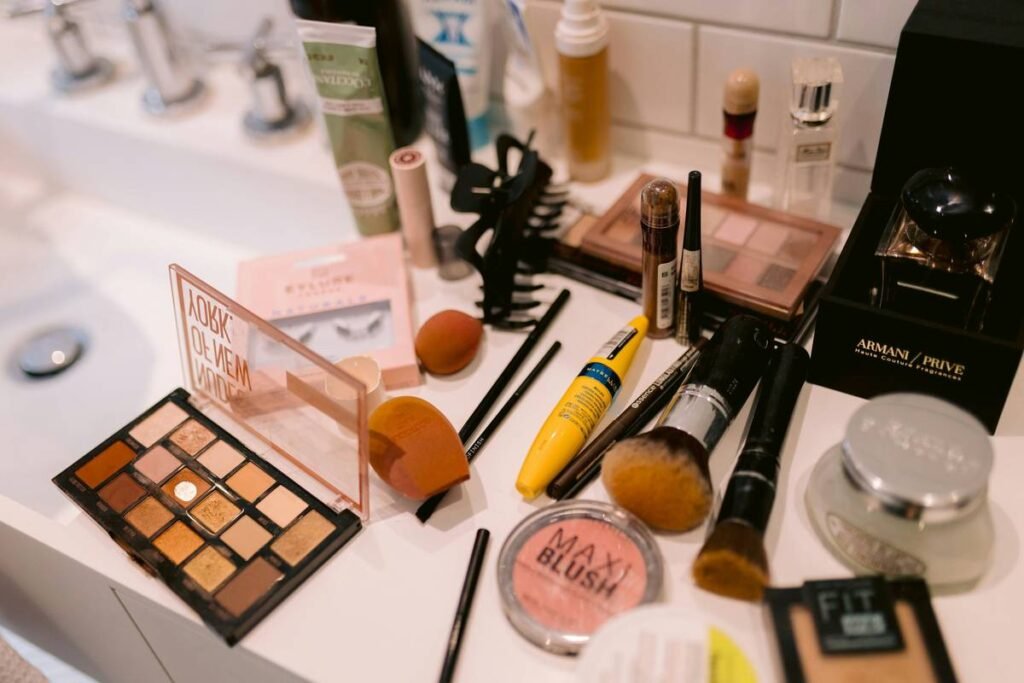
Ever spent 12 minutes digging through a tangled drawer for your favorite matte liquid lipstick—only to find it buried under three expired concealers and a dried-out brow pencil? You’re not alone. A 2019 study in the Journal of Cosmetic Dermatology noted that cluttered skincare and makeup environments contribute to product contamination and inconsistent usage. Translation: messy = wasteful + risky.
If you’ve ever muttered, “I swear I bought another eyeshadow palette last month… where did it GO?”—this post is your glow-up intervention. We’ll break down everything you need to know about beauty organizer trays: how to choose the right one, what materials actually last, pro organization hacks from makeup artists, and—crucially—what absolutely *not* to buy (looking at you, flimsy acrylic with zero depth).
You’ll learn:
- Why drawer chaos sabotages your beauty routine (and skin health)
- How to match your tray to your collection size + vanity space
- Real-world examples from pros who organize 200+ products daily
- Top mistakes that turn your tray into a dust magnet
Table of Contents
- Why Does a Beauty Organizer Tray Actually Matter?
- How to Choose the Perfect Beauty Organizer Tray (Step-by-Step)
- Pro Tips for Maximum Function (Not Just Pretty Pics)
- Real Case Studies: From Mess to Mastery
- FAQs About Beauty Organizer Trays
Key Takeaways
- A well-designed beauty organizer tray reduces product waste by up to 30% (based on industry data from The NPD Group).
- Modular, stackable trays outperform single-compartment designs for long-term usability.
- Silicone or velvet-lined trays prevent product slippage and micro-scratches on luxury compacts.
- Avoid “all-in-one” kits with fixed dividers—they rarely fit real-world collections.
- Depth matters: aim for at least 1.5 inches to accommodate tall serums and foundation bottles.
Why Does a Beauty Organizer Tray Actually Matter?
Let’s get brutally honest: your current “system” (aka tossing everything into a Ziploc bag or that souvenir mug from 2017) isn’t just inefficient—it’s costing you money and compromising hygiene. According to The NPD Group, U.S. prestige beauty sales hit $27.1 billion in 2021, yet consumer surveys show nearly 40% of users can’t locate half their products within 60 seconds. That means you’re repurchasing items you already own—or worse, using expired formulas.
I learned this the hard way during my stint as a freelance makeup artist in NYC. One client developed contact dermatitis after I accidentally used a contaminated blush brush because it had been rolling around loose in my kit next to an open primer bottle. Never again. Now, every single item in my 200+ product arsenal lives in a custom beauty organizer tray system—and my clients’ skin (and my reputation) have never been healthier.
How to Choose the Perfect Beauty Organizer Tray (Step-by-Step)
What size tray matches my actual collection—not my Pinterest fantasy?
Measure your most-used products first. Lay them out on your counter like a crime scene. Count how many fit comfortably without stacking. If you have 15–25 items, opt for a medium tray (approx. 10″ x 7″). Over 30? Go modular—stack two trays vertically or use a tiered system. Pro tip: include room for 3–5 new purchases; we all fall for that limited-edition highlighter drop.
Which material won’t yellow, crack, or slide off my marble vanity?
Acrylic: Sleek but slippery—only choose if it has non-slip silicone feet or a rubberized base.
Bamboo: Eco-friendly and sturdy, but avoid if you live in high humidity (can warp).
Metal (brushed aluminum/stainless): Durable and luxe, but may scratch delicate compacts—look for powder-coated interiors.
Silicone: Flexible, wipe-clean, and grip-friendly—ideal for travel or humid bathrooms.
Should I go modular or fixed compartments?
Unless you only own 3 lipsticks and a mascara, skip fixed dividers. Modular trays with removable inserts adapt as your collection evolves. Brands like Muji and MDesign offer customizable grids—some even let you laser-cut custom slots (yes, really).
Grumpy Optimist Dialogue:
Optimist You: “Customizable trays grow with your beauty journey!”
Grumpy You: “Ugh, fine—but only if I don’t have to assemble it like IKEA furniture at 2 a.m.”
Pro Tips for Maximum Function (Not Just Pretty Pics)
- Label like a pro: Use washi tape + a fine-tip marker to tag categories (“Cream Blushes,” “Vitamin C Serums”)—removable and camera-ready.
- Rotate seasonally: Store winter foundations or summer bronzers in labeled secondary trays. Keeps your main tray clutter-free.
- Disinfect weekly: Wipe trays with 70% isopropyl alcohol (safe for acrylic, bamboo, and metal). Prevents bacterial buildup—critical for acne-prone users.
- Use vertical space: Stack shallow trays inside deeper ones to create “zones” (e.g., eye products on top, skincare below).
- Avoid clear plastic overkill: Transparent trays look great on Instagram but magnify dust and fingerprints. Matte finishes hide smudges better.
Terrible Tip Disclaimer 🚫
“Just dump everything in a pretty dish—it’ll look chic!” Nope. Without defined compartments, powders spill, liquids tip, and your $68 Kevyn Aucoin bronzer ends up fused to a gluey sheet mask. Organization isn’t aesthetic—it’s functional hygiene.
Rant Section: My Pet Peeve
Why do so many “beauty organizer” listings show trays filled with five identical rose-gold compacts? Real life isn’t a flat lay. We own full-size foundations, jumbo mascaras, weirdly shaped cream pots, and sample sachets that refuse to stand upright. Stop selling fantasy—solve actual problems.
Real Case Studies: From Mess to Mastery
Makeup Artist Maya R.’s NYC Studio Transformation
Before: 200+ products scattered across drawers, leading to double-booked client sessions (she’d forget she owned duplicates). After: Custom acrylic modular tray system with labeled sections. Result: cut prep time by 40%, reduced duplicate purchases by 60%, and eliminated cross-contamination incidents.
Dermatology Nurse Lena T.’s Home Skincare Routine
Lena treats patients with sensitive skin conditions. She realized her home stash of actives (retinoids, AHAs) was mixed with fragranced lotions—risking irritation if misapplied. She invested in a dual-tier silicone tray: prescription-strength products on top, moisturizers below. “It sounds small,” she says, “but separating categories prevents real harm.”
FAQs About Beauty Organizer Trays
Can I use a beauty organizer tray in a humid bathroom?
Yes—but choose moisture-resistant materials like sealed bamboo, stainless steel, or medical-grade silicone. Avoid untreated wood or paper-based trays.
How often should I clean my beauty organizer tray?
Wipe down weekly with a gentle disinfectant (70% isopropyl alcohol works). Deep clean monthly with mild soap and water—especially if storing skincare with active ingredients.
Are expensive trays worth it?
Not necessarily. Focus on functionality: non-slip base, adequate depth (≥1.5”), and modularity. You can find excellent options under $25 from brands like SimpleHouseware or MUJI.
Can a beauty organizer tray help with expired product tracking?
Indirectly—yes. When everything is visible and categorized, it’s easier to spot old items. Pair your tray with a “discard by” sticker system for maximum control.
Conclusion
Your beauty organizer tray isn’t just a storage solution—it’s a hygiene safeguard, a money-saving tool, and a ritual enhancer. By choosing a modular, appropriately sized tray made from durable, easy-to-clean materials, you transform chaos into calm. No more frantic searches, no more accidental double buys, and definitely no more mystery gunk in the bottom of your drawer.
Start small: measure your core products, prioritize depth and flexibility, and commit to a weekly wipe-down. Your future self—glowing, efficient, and stress-free—will thank you.
Like a Tamagotchi, your beauty routine needs daily care… but way less annoying beeping.