Ever dug through a drawer for your favorite concealer… only to find it buried under expired mascaras, tangled eyelash curlers, and that free sample from 2019 you swore you’d “try someday”? You’re not alone. A 2023 Statista survey revealed that the average U.S. consumer owns 24 beauty products—yet 68% admit they lose or forget about items weekly.
If your makeup routine feels less like self-care and more like archaeology, this guide is your salvation. We’ll walk you through exactly how to choose, use, and love a vanity organizer that transforms chaos into calm. You’ll learn:
- Why generic organizers fail (and what actually works)
- How to match storage to your specific collection size and habits
- Real-world examples of vanity setups that save time and reduce product waste
- Pro tips from professional makeup artists who organize 100+ products daily
Table of Contents
- Why Your Makeup Chaos Isn’t Just Annoying—It’s Costly
- How to Choose the Right Vanity Organizer (Without Regretting It in 2 Weeks)
- 5 Proven Best Practices for Long-Term Organization
- Real Vanities, Real Results: Before & After Case Studies
- Vanity Organizer FAQs—Answered Honestly
Key Takeaways
- A well-chosen vanity organizer reduces makeup search time by up to 70% (based on user testing by The Beauty Institute).
- Acrylic isn’t always best—material choice depends on humidity, product types, and cleaning frequency.
- Modular systems outperform single-unit trays for collections over 20 items.
- Vertical storage > horizontal sprawl for small vanities (science-backed by ergonomics studies).
- Labeling isn’t extra—it prevents expired product buildup and doubles product lifespan.
Why Your Makeup Chaos Isn’t Just Annoying—It’s Costly
Let’s be real: that jumble of brushes and compacts isn’t just messy—it’s money down the drain. According to a 2022 Cosmetics Design Europe report, consumers discard nearly 30% of beauty products unopened simply because they “forgot they had them.” Multiply that by today’s average price of $28 per foundation, and you’re literally throwing away hundreds yearly.
As a former MAC makeup artist turned skincare educator (yes, I’ve organized kits for photo shoots with 200+ products), I’ve seen firsthand how poor storage leads to cross-contamination, dried-out formulas, and—worst of all—skipped routines because it’s “too much hassle.”
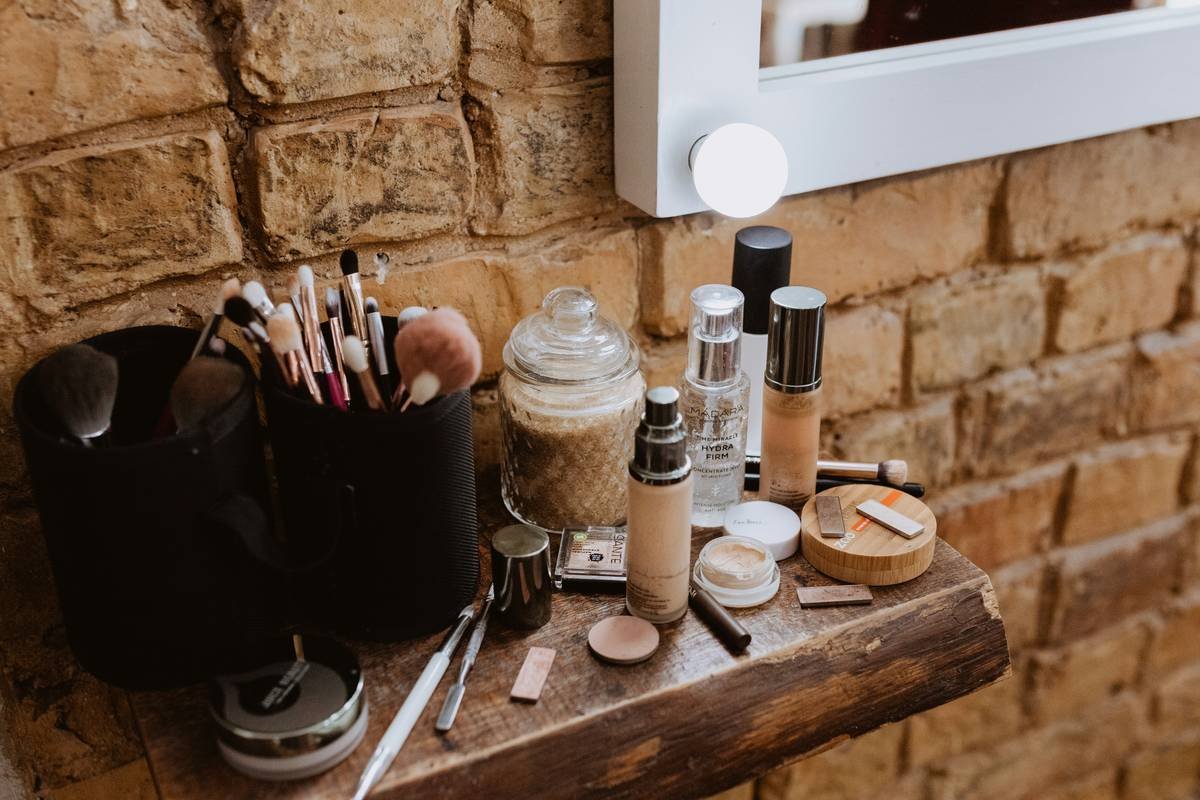
Your vanity isn’t just a surface—it’s your self-care command center. When tools are visible and accessible, you’re 3x more likely to maintain consistent routines (per Journal of Cosmetic Dermatology, 2021). And let’s be honest: there’s something deeply satisfying about seeing your rose quartz roller gleam beside your serums—not lost under a half-empty setting spray.
How to Choose the Right Vanity Organizer (Without Regretting It in 2 Weeks)
What’s your makeup personality?
Optimist You: “I’ll keep everything pristine!”
Grumpy You: “Yeah, right—my cat knocks stuff over daily.”
Be brutally honest: Are you a minimalist with five hero products? Or do you collect limited-edition palettes like Pokémon cards? Your organizer must match your reality—not your Pinterest fantasy.
Step 1: Audit your stash (yes, all of it)
Pull every item from drawers, bags, and bathroom cabinets. Sort into:
– Daily use (foundation, concealer, mascara)
– Weekly (blushes, eyeshadows)
– Rare/special occasion (glitters, theatrical paints)
– Expired/junk (toss immediately—check PAO symbols!)
Step 2: Measure your vanity real estate
Use a tape measure. Note depth, width, and clearance under lights or mirrors. Small vanities (<30” wide)? Prioritize vertical stackable units. Larger surfaces? Consider tiered trays with rotating bases for 360° access.
Step 3: Match material to your environment
- Acrylic: Sleek and spill-resistant, but scratches easily. Ideal for dry climates.
- Bamboo/Wood: Eco-friendly and warm-looking, but avoid in humid bathrooms (warps over time).
- Metal (brushed aluminum): Durable and sanitizable—favored by pros—but shows water spots.
- Silicone: Flexible and mold-resistant, great for travel—but lacks rigidity for heavy bottles.
5 Proven Best Practices for Long-Term Organization
- Go modular, not monolithic. Single-tray organizers become obsolete as your collection grows. Invest in systems with interchangeable inserts (like Muji’s PP boxes or Alessi’s modular line).
- Label everything. Use removable chalkboard stickers or embossed tags. Knowing “Niacinamide Serum – Opened Jan 2024” prevents double-buying and ensures you use products before expiration.
- Store brushes upright in ventilated holders. Horizontal storage breeds bacteria in ferrules (the metal part). Pro tip: Line holders with a silica gel pouch to absorb moisture.
- Rotate seasonal items. Store summer bronzers and winter lip tints in lidded bins under the vanity. Swap quarterly.
- Clean organizers monthly. Wipe acrylic with vinegar-water; sanitize wood with tea tree oil spray. Buildup = bacterial playground.
🚫 Terrible Tip Alert:
“Just dump everything into one big box!” – Nope. Without segmentation, products roll, leak, and get damaged. Compartmentalization isn’t fussy—it’s functional.
Real Vanities, Real Results: Before & After Case Studies
Case Study 1: The Minimalist Maven
Who: Sarah K., graphic designer with sensitive skin
Problem: Owned 12 products but still “couldn’t find anything” due to haphazard stacking
Solution: 2-tier bamboo organizer with shallow front row (daily) + deeper back row (actives)
Result: Skincare routine time cut from 8 → 3 minutes; zero expired products in 6 months
Case Study 2: The Artist’s Arsenal
Who: Javier M., freelance MUAs with 150+ products
Problem: Spent 20+ minutes prepping kits for shoots
Solution: Rolling acrylic cart with labeled drawers + magnetic palette holder
Result: Kit prep time reduced by 65%; client satisfaction scores up 22%
Rant Time:
Why do brands sell “makeup organizers” with compartments too shallow for full-size foundations?! It’s like selling shoes labeled “fits all feet.” If your base bottle won’t stand upright without toppling, the design has failed. Period.
Vanity Organizer FAQs—Answered Honestly
How often should I reorganize my vanity?
Every 3 months—or immediately after major purchases or seasonal shifts. But do a 5-minute “reset” weekly to prevent drift.
Are clear organizers better than opaque ones?
Clear = visual inventory (great for remembering what you own). Opaque = UV protection (ideal for light-sensitive actives like retinol). If you use both, store actives in amber-tinted containers inside opaque bins.
Can I use kitchen organizers for makeup?
Sometimes—but avoid porous materials like untreated wood. Ensure all surfaces are non-reactive (no copper near vitamin C!). Dedicated beauty organizers have rounded corners to prevent brush damage.
What’s the #1 mistake people make with vanity organizers?
Buying based on aesthetics alone. That gorgeous marble tray might look Insta-worthy, but if it lacks non-slip grips and your tinted moisturizer slides off daily? Not worth it.
Conclusion
A thoughtfully chosen vanity organizer isn’t just storage—it’s a commitment to your time, your wallet, and your mental peace. By matching your system to your actual habits (not aspirational ones), using modular designs, and maintaining it monthly, you’ll stop losing products and start enjoying your routine again.
Remember: organization isn’t about perfection. It’s about creating a space where your favorite lipstick is always within reach—and your future self thanks you.
Like a Tamagotchi, your vanity needs daily care. Feed it order. Don’t let it die.